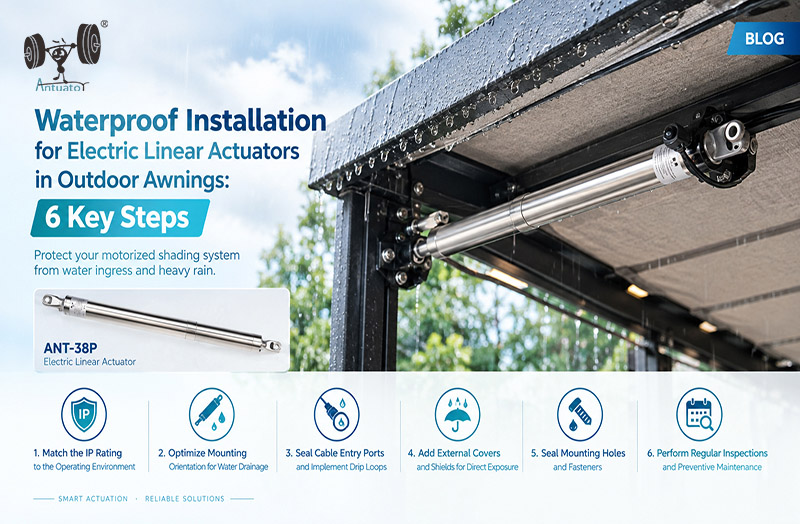
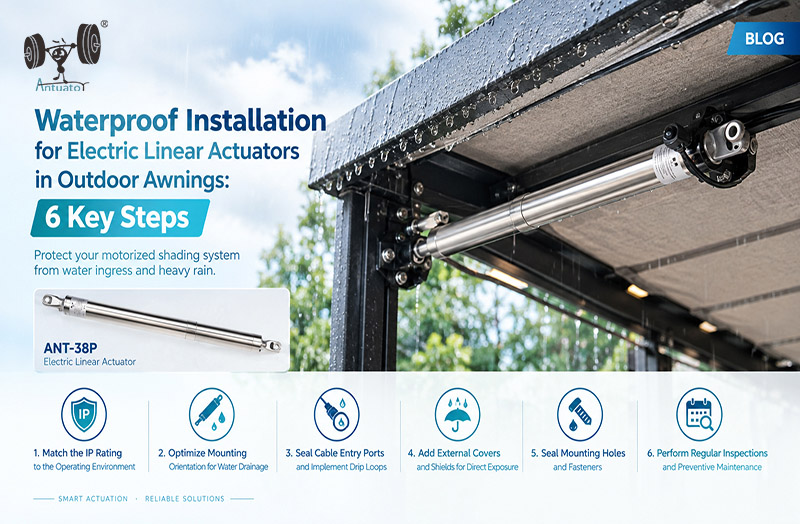
Waterproof Installation for Electric Linear Actuators in Outdoor Awnings or pergolas: 6 Key Steps
Installing an electric linear actuator on an outdoor pergola or awning? Learn 6 critical waterproof installation guidelines to protect your motorized shading system from water ingress and heavy rain.
Electric linear actuators are essential components in motorized outdoor pergolas, retractable awnings, and sun shading systems. While choosing an actuator with a high Ingress Protection (IP) rating provides a solid baseline, product design alone isn't enough.
Improper physical placement, unsealed wiring, or bad mounting orientations can cause rainwater to pooling around key joints, eventually leading to internal water ingress or electrical short circuits.
To maximize equipment lifespan and system reliability, combining high product protection with correct installation techniques is crucial. Here are six essential guidelines for waterproof electric actuator installation on outdoor shading structures.
Before installation, verify that the actuator’s Ingress Protection (IP) rating matches your specific environmental demands. Outdoor sun shading systems face constant rain, high humidity, and temperature variations.
Base Requirement: Look for actuators with a minimum rating of IP65 or IP66 for standard outdoor weather protection.
Extreme Conditions: For heavy rainfall zones or direct water exposure, select an IP69K rated actuator designed to withstand high-pressure washdowns.
Note: A proper IP rating provides foundational safety, but correct installation practices are what ensure long-term performance.
Rainwater naturally flows down the canopy frame during heavy storms. If an actuator is mounted in a position that forms a water trap, moisture will accumulate around key moving joints.
Mount the actuator at an angle that allows gravity to shed water away from critical connection points.
Position extension rods downward whenever possible to avoid rainwater settling around the front rod seal.
Ensure structural clearance so water drains off the mounting bracket immediately without forming standing pools.
Cable entries and wiring terminals are common entry points for moisture if not handled properly during assembly.
Use IP-rated cable glands and waterproof connectors for all external wire joins.
Create a Drip Loop: Route the power cable downward below the entry point before bending it back up to connect. This forces water running down the cable to drop off harmlessly at the lowest point rather than entering the housing or connection port.
If the actuator is installed in a spot exposed to direct, heavy downpours or continuous runoff from the roof, adding structural shielding offers invaluable extra protection.
Install protective cowls, rain deflectors, or architectural covers directly above the actuator.
Direct drainage channels away from the main drive body and mounting brackets.
Combining high-IP actuator housing with physical water deflectors creates a double-barrier defense against extreme weather.
Water often seeps through gaps between mounting brackets, frame bolt holes, and fasteners, leading to hidden corrosion and eventual moisture migration into the drive housing.
Apply outdoor-grade silicone sealant or rubber gaskets around mounting bolt holes and bracket interfaces.
Ensure all mechanical fasteners are tightened properly to prevent movement that could break environmental seals.
Maintain proper mechanical alignment to avoid side-loading, which degrades internal rod seals over time.
Outdoor shading systems naturally degrade over time due to UV exposure, wind vibration, and temperature cycles. Seals, cable jacketing, and mounting brackets require periodic checks.
Inspect rubber seals and cable entry glands every few months for signs of cracking or UV degradation.
Verify that mounting bolts remain tight and sealant layers stay intact.
Avoid operating motorized awnings during extreme weather events like hail or severe storms where physical damage could rupture external seals.
Reliable outdoor performance relies equally on the product itself and how it is installed. High IP-rated electric linear actuators form the foundation, while proper drainage angles, sealed cable entries, physical shields, and sealed fasteners ensure complete moisture protection.
By applying these six rules, manufacturers and installers can significantly reduce warranty claims, avoid short circuits, and extend the operating life of motorized outdoor shading systems.