In modern architecture, the concept of “breathing buildings” is becoming increasingly popular.
From commercial complexes and office buildings to high-end public architecture, more and more projects are adopting Motorized Facade systems. These intelligent facade solutions allow buildings to dynamically adjust shading, ventilation, and daylighting, improving both energy efficiency and indoor comfort.
Behind these dynamic structures lies a critical yet often overlooked component — the electric linear actuator.
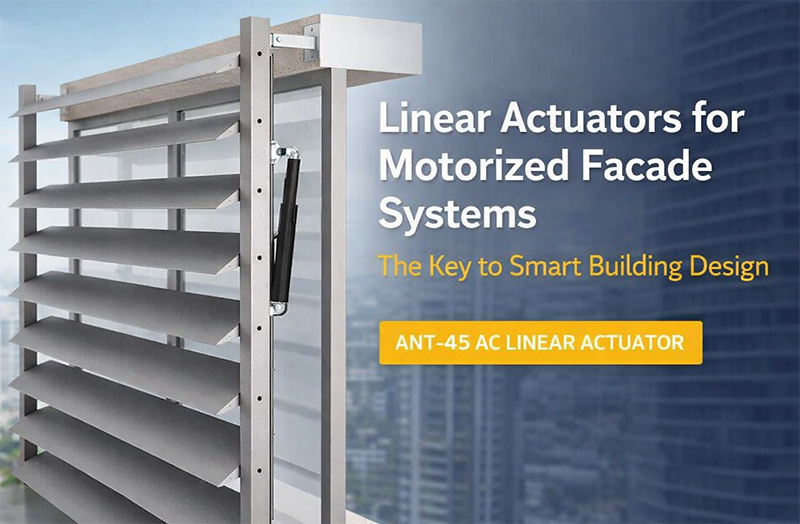
A Motorized Facade refers to a building facade system that integrates electric drive mechanisms to enable dynamic movement of facade elements.
Typical applications include:
Automated opening and closing of ventilation windows
Angle adjustment of external louvers or sun shading systems
Dynamic curtain wall control
Integration with natural ventilation and energy-saving systems
Unlike traditional static facade structures, motorized facades can automatically adjust according to environmental conditions such as sunlight, temperature, and airflow.
This technology has already been widely adopted in regions such as Europe and Australia, particularly in green building and smart architecture projects.
In motorized facade applications, actuators are expected to meet several critical requirements:
✔ Reliable operation over long periods
✔ Multi-point synchronized movement
✔ High durability for outdoor environments
✔ Direct integration with building power systems
Compared with traditional DC actuator solutions, AC-driven actuators offer several advantages in these applications.
AC actuators can operate directly from standard mains power (110–230V AC), eliminating the need for additional power converters.
This simplifies electrical installation and reduces system complexity in large building projects.
With AC power systems, multiple actuators can be connected in parallel, making them well suited for large-scale centralized facade control systems.
This is one of the key reasons why the ANT-45 AC linear actuator performs particularly well in motorized facade applications.
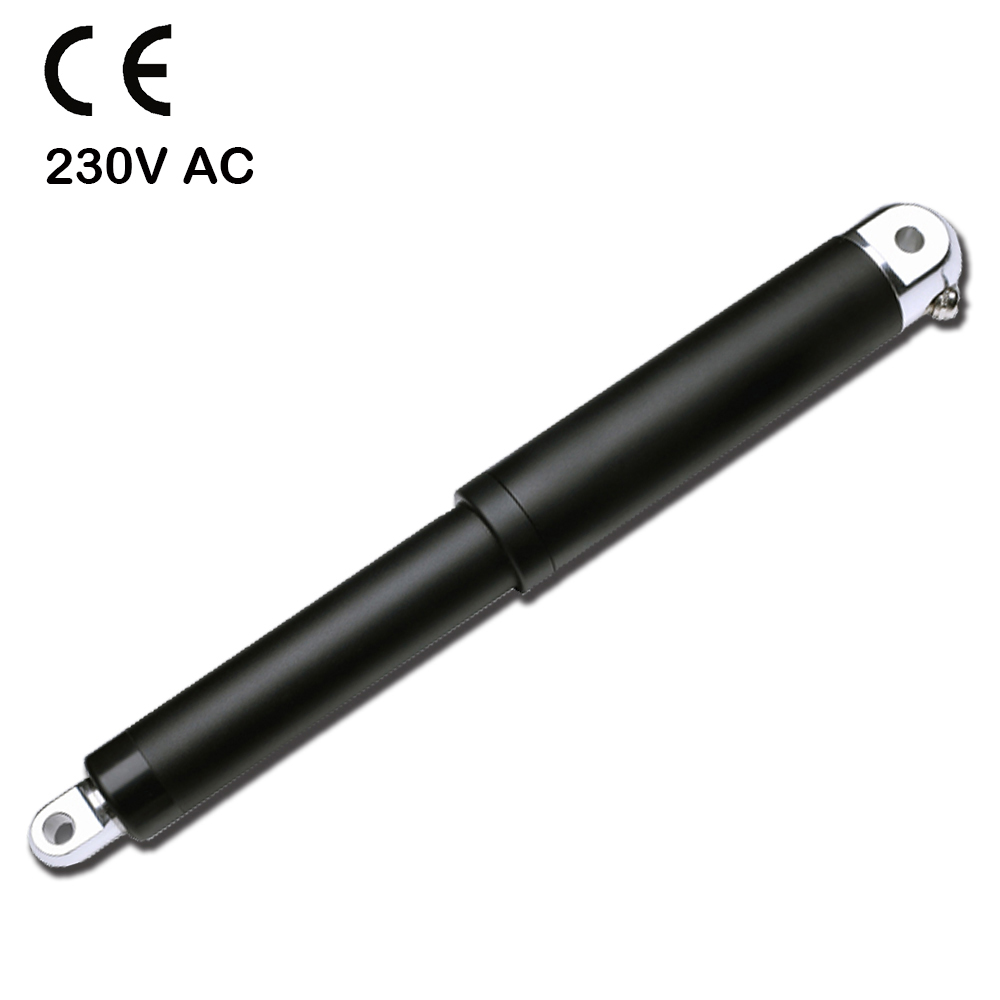
The ANT-45 AC Linear Actuator is powered by 230V AC input and was designed with building automation and facade applications in mind.
Its structure and performance characteristics make it well suited for modern architectural systems.
Voltage fluctuations are common in large building electrical networks.
The ANT-45 actuator is designed to maintain stable operating speed even when voltage varies, ensuring smooth and synchronized movement of facade systems.
This stability is particularly important when multiple actuators must operate simultaneously.
Facade systems are continuously exposed to environmental challenges such as:
Rain and humidity
Dust and pollution
Temperature fluctuations
The ANT-45 offers IP66 / IP67M protection, providing strong resistance to outdoor conditions.
For more demanding environments, a stainless steel version is also available, offering improved corrosion resistance and long-term durability.
In architectural projects, mechanical components must often be hidden within the building structure.
The compact design of the ANT-45 actuator allows easy integration into:
Curtain wall systems
Sun shading structures
Ventilation window mechanisms
This ensures both functional performance and architectural aesthetics.
Motorized facade systems are frequently integrated with building management systems (BMS) to allow centralized control.
The ANT-45 actuator supports:
Accurate stroke control
Stable start and stop performance
Reliable multi-actuator synchronization
These features enable precise movement and consistent performance across large facade installations.
Across international markets, Motorized Facade technology is becoming an essential component of smart buildings and green architecture.
Dynamic facade systems offer several key benefits:
Improved energy efficiency
Better natural ventilation
Enhanced indoor comfort
Greater architectural flexibility
As these systems become more widely adopted, selecting a reliable actuator solution is increasingly critical for system performance and longevity.
The ANT-45 AC Linear Actuator has been developed specifically to meet these evolving application requirements.
As buildings evolve from static structures into dynamic, responsive systems, the role of actuator technology becomes more important than ever.
With strong protection capability, stable performance, and a compact design suitable for architectural integration, the ANT-45 AC Linear Actuator provides a reliable driving solution for motorized facade systems.
Antuator will continue to focus on actuator innovation for building automation, delivering dependable motion solutions for global customers.