Yacht Electric Actuator Selection Guide: 7 Key Factors for Marine Motion Control
Automated systems on modern yachts and marine vessels—from engine hatches, deck doors, and swim platforms to anchor mechanisms and outboard motor lifts—rely heavily on electric linear actuators. However, operating in harsh marine environments means these components face constant exposure to salt spray, high humidity, UV radiation, and severe mechanical stress.
Choosing the wrong actuator can lead to premature failure, water ingress, or costly downtime at sea. To ensure long-term reliability and safety, here are seven critical factors to evaluate when specifying a marine-grade electric actuator.
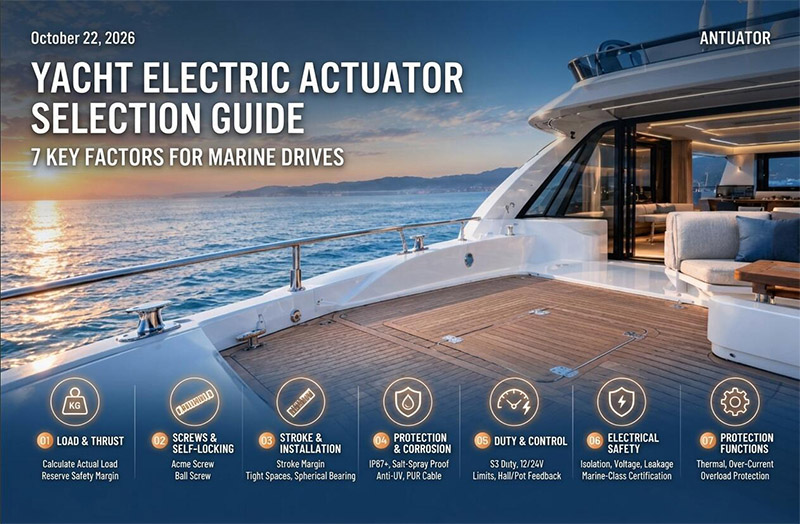
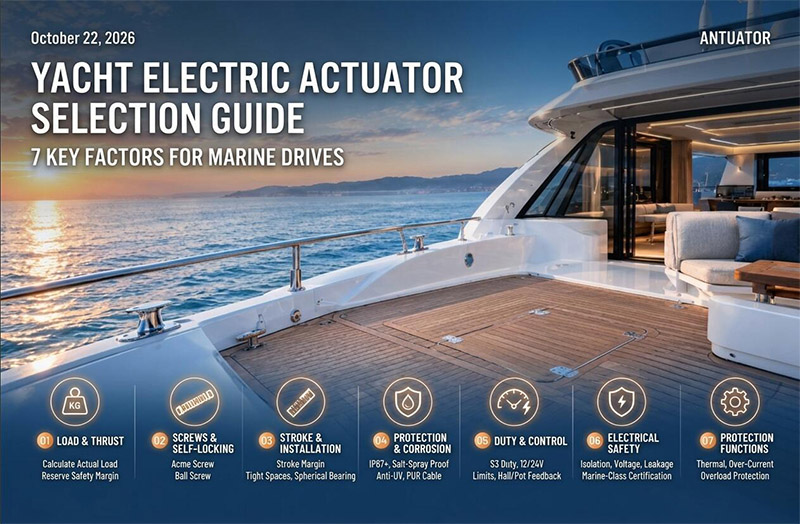
Determining the required force goes beyond looking at the dry weight of the panel or hatch. You must calculate:
The actual dynamic load during opening and closing cycles.
Mechanical leverage and mounting angles.
External resistance, such as wind force, water resistance, or snow accumulation.
Never size an actuator at 100% of its rated capacity. Always apply a reasonable safety margin to handle unexpected force spikes during operation. Additionally, verify whether the actuator handles push and pull forces equally, especially for overhead or vertical lifting applications.
The internal drive mechanism dictates both efficiency and holding capability when power is removed:
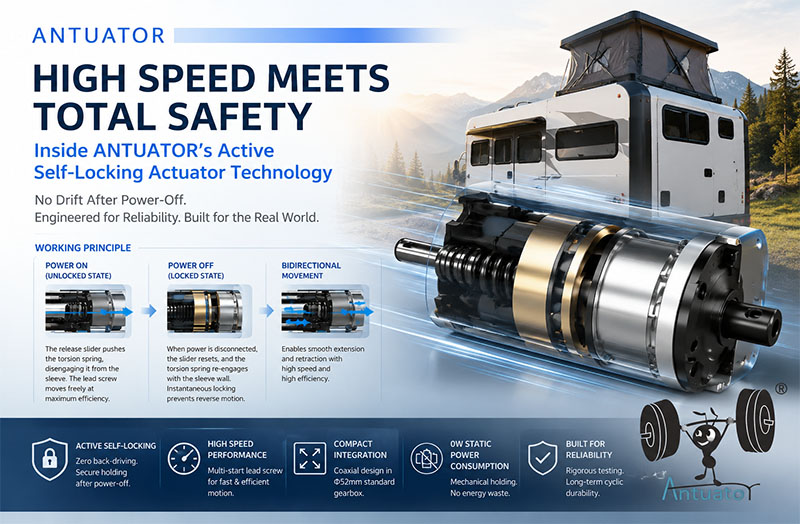
Trapezoidal (Acme) Screws: Offer high inherent friction, making them suitable for applications where self-locking under static load is required without constant power.
Ball Screws: Provide superior mechanical efficiency and smoother motion, but they lack natural self-locking ability and can back-drive under load.
If your marine application requires holding a heavy hatch or door in place when turned off, confirm the static holding force of the unit. For critical overhead installations, choose an actuator equipped with an integrated mechanical brake rather than relying solely on screw friction.
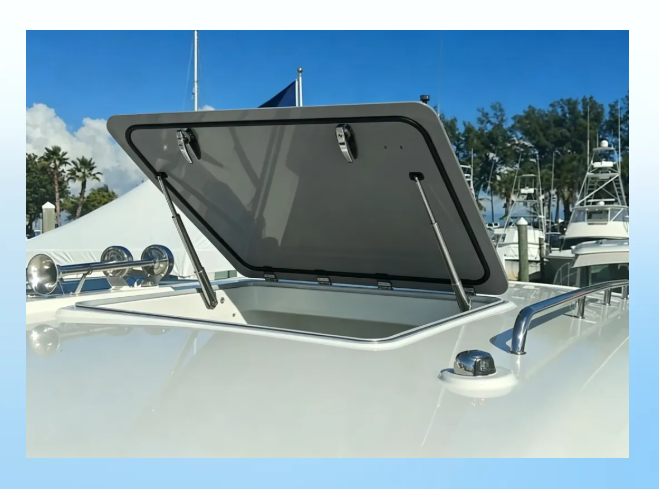
Marine engine compartments and deck structures often present tight spatial constraints. During the selection process:
Double-check stroke length, retracted length (hole-to-hole distance), and maximum extended envelope.
Ensure clear mechanical clearance throughout the entire range of motion to avoid binding.
Because mounting geometry shifts dynamically during operation, rigid mounting hardware can introduce damaging side-load forces. Utilizing spherical rod ends (fisheye bearings) at the mounting points allows for minor angular misalignment, reducing mechanical stress and preventing premature pin wear.
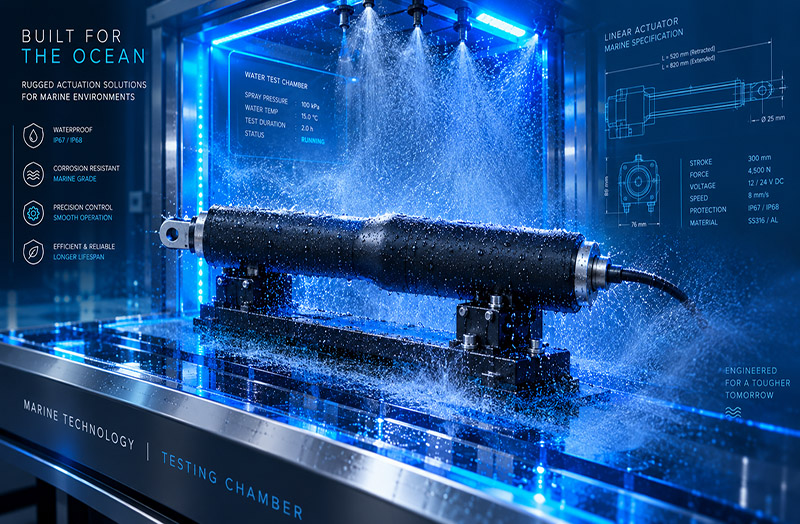
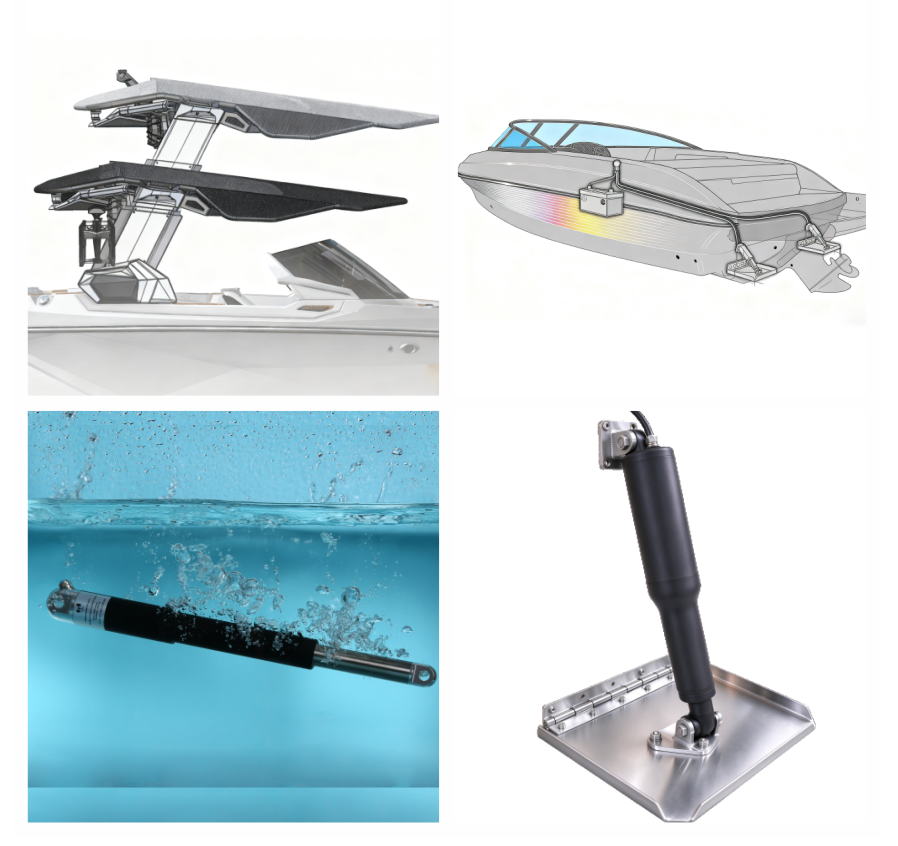
Saltwater is one of the most aggressive environments for industrial hardware. Standard industrial actuators will quickly corrode or short-circuit if exposed to marine spray.
Ingress Protection (IP Rating): Select actuators with a minimum of IP67 protection. For submerged or high-pressure washdown areas, look for IP67M or IP69K ratings.
Materials & Finishes: Specify 316L stainless steel or anodized marine-grade aluminum for external housings and extension tubes.
Cabling: Ensure the power and signal cables are made from UV-resistant, oil-resistant, and anti-seawater polyurethane (PUR) materials. High IP ratings must be matched with proper material selection to guarantee longevity.
Matching the actuator's electrical profile to the boat's power system is essential for smooth integration:
Operating Voltage: Standard marine systems typically run on DC 12V or DC 24V.
Duty Cycle: Most hatch lifts operate intermittently (e.g., S3 duty cycle). Ensure the motor's thermal rating aligns with expected usage frequency.
Limit Switches & Feedback: Built-in mechanical or electronic limit switches prevent over-travel. For automated systems requiring multi-actuator synchronization or preset positions, specify actuators with Hall effect sensors or potentiometers.
Safety standards onboard ships are significantly stricter than land-based industrial setups:
Inspect internal insulation, dielectric strength, and leakage current prevention to guard against onboard electrical faults.
Verify whether your target market or classification society requires specific compliance, such as CE, DNV, or Lloyd's Register (LR) certifications.
Confirm that certifications apply directly to the specific actuator model and its marine enclosure, rather than just a general component rating.
Unexpected mechanical blockages or thermal overload can burn out motors quickly. A robust marine actuator should integrate multi-layered protective mechanisms:
Overcurrent Protection: Instantly cuts power if the current spikes due to physical obstruction.
Thermal Protection: Shuts down the motor if internal temperatures exceed safe limits during continuous cycling.
Overload Clutch / Electronic Cut-off: Prevents structural damage to both the actuator and the vessel's hull.
Understanding how each protection feature triggers—and how it resets—ensures your control system can respond correctly during an event.
Selecting the right yacht electric actuator requires balancing load capacity, drive efficiency, environmental sealing, and electrical safety. Designing with these seven factors in mind ensures long-term operational reliability out on the water.
At ANTUATOR (Shanghai Shuntuo Motor Co., Ltd.), we specialize in complete motion control solutions tailored for the marine industry. From full 316L stainless steel linear actuators to heavy-duty models with IP67M / IP69K protection and custom control boxes, we support yacht builders and marine OEMs worldwide with durable, precision-engineered actuation systems.
Looking for technical advice or custom actuator configurations for your next marine project? Contact our engineering team today to explore our full product range.