When we talk about electric linear actuators, most people focus on the motor, load capacity, stroke length, or speed. However, hidden inside the actuator is a component that plays an even more decisive role in performance—the gearbox.
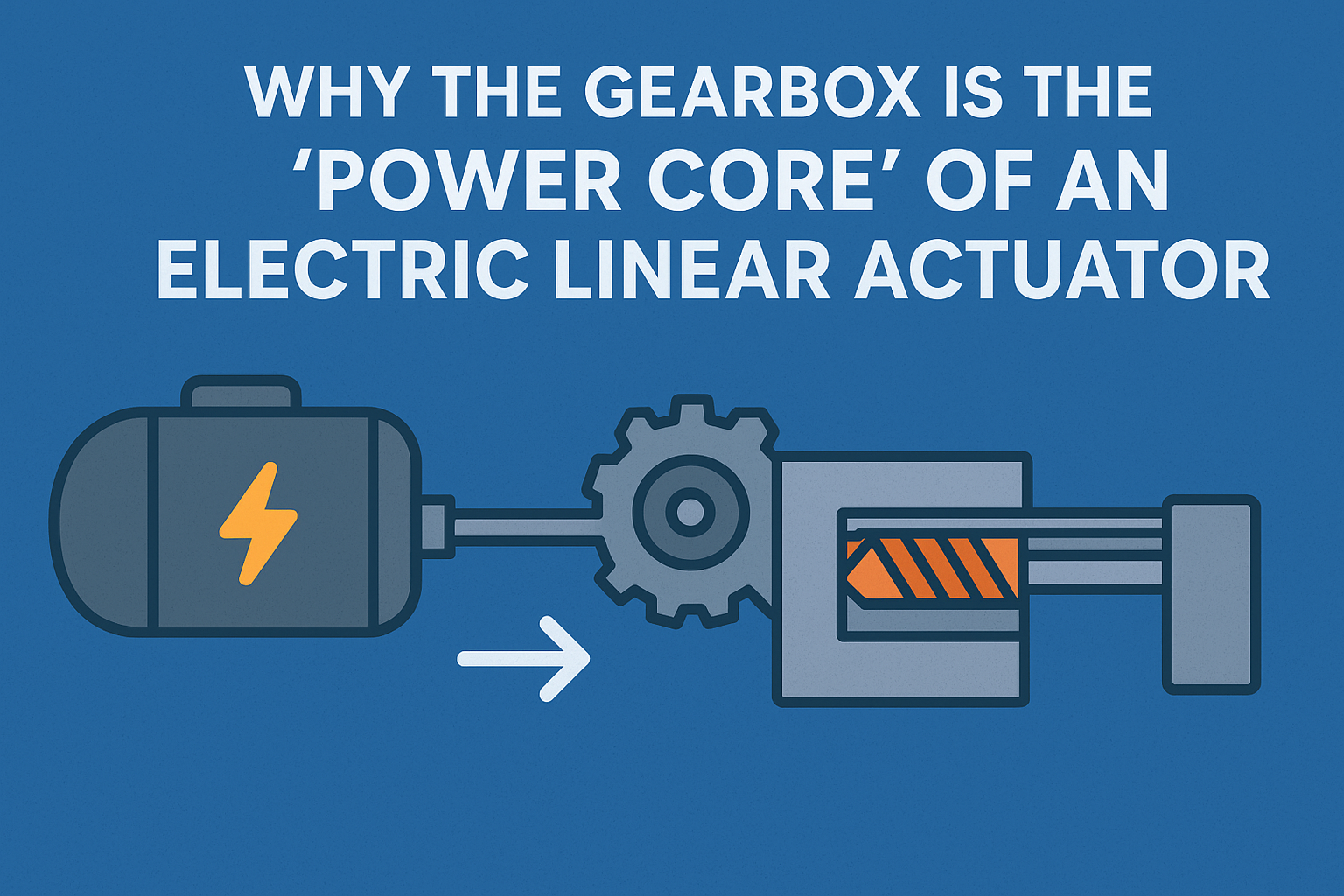
If the motor is the “heart” of an actuator, then the gearbox is the “power and speed regulator” that makes high-force, smooth, and reliable linear motion possible.
In this article, we break down the key functions of the gearbox, why it is essential, and how it directly impacts actuator performance.
Imagine riding a bicycle up a steep hill:
Your legs = the motor
The bicycle’s gear set = the gearbox
The wheels = the actuator’s moving rod
When you switch to a low gear (large sprocket), pedaling becomes harder, but the bike climbs steadily with more torque. This is exactly what happens inside an electric linear actuator: the gearbox converts high-speed, low-torque motor rotation into strong, controlled linear motion.
Electric motors naturally produce high speed but low torque.
Actuators, however, require high torque and low speed to push or lift heavy loads.
A gearbox solves this mismatch through reduction ratios.
Example:
A micro motor producing only 0.1 N·m of torque can be boosted to 10 N·m with a 100:1 gearbox—enough to move loads weighing tens or even hundreds of kilograms.
Why it matters:
Without a gearbox, most electric actuators could not generate the force required for real-world applications.
Motor speeds can reach 3,000–10,000 RPM, far too high for linear movement.
The gearbox slows this down to a safe and controllable actuator speed—often just a few millimeters or centimeters per second.
This ensures:
Smooth movement
Accurate positioning
Safe operation
Better user experience
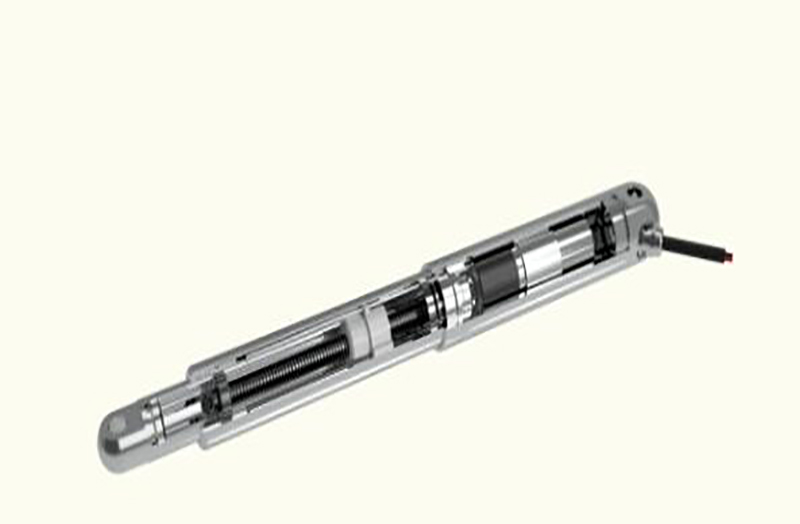
Many actuator designs rely on the gearbox to drive the screw mechanism (lead screw or ball screw) that converts rotational motion into linear motion.
The gearbox helps the rotating motor output:
Proper torque
Proper direction
Proper mechanical interface
This ensures efficient and reliable motion transmission within the actuator.
A gearbox allows the motor to run within its optimal efficiency range.
Directly connecting a load to the motor can cause:
Difficult starts
Overheating
Excessive noise
Shortened motor life
With a gearbox acting as a buffer, the motor experiences less stress, resulting in:
Reduced wear
Lower heat generation
Higher energy efficiency
Extended lifespan
For some applications, self-locking is essential—especially when the actuator must hold a position after power is shut off.
Gearboxes such as worm-gear structures provide natural back-driving resistance.
Benefits of self-locking:
Prevents unintended movement
Ensures safety in medical beds, lift tables, and adjusts furniture
Holds loads in a fixed position without continuous power consumption
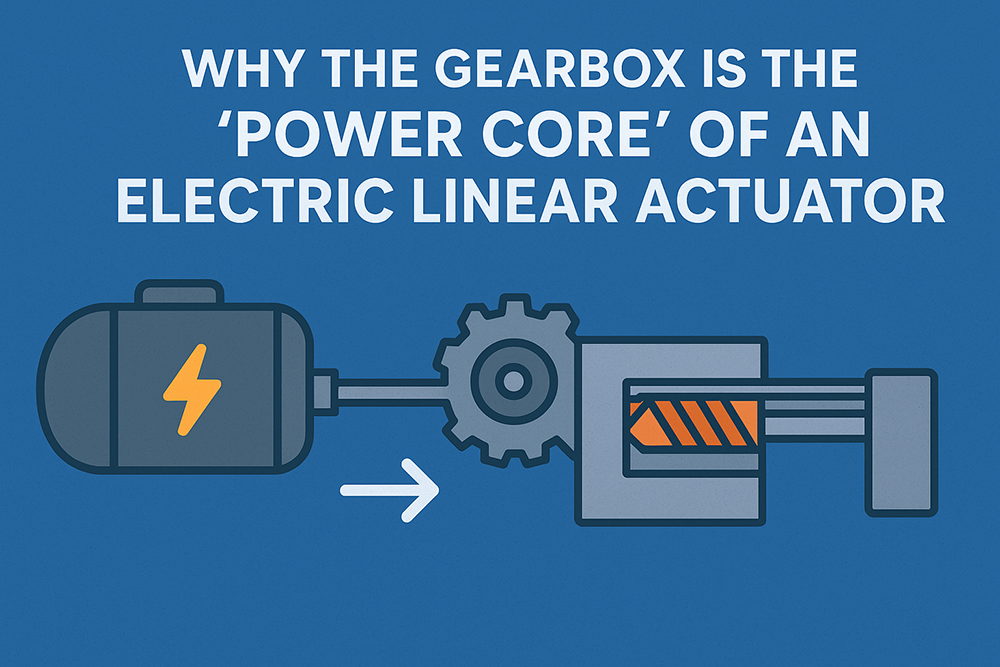
Motor (high speed, low torque)        ↓
   Gearbox (torque increase, speed reduction, optional self-lock)        ↓Actuator mechanism (lead screw & nut)        ↓Strong and stable linear push/pull force
This synergy is what allows modern electric actuators to replace many hydraulic or pneumatic systems—offering cleaner, safer, and more efficient motion control.
Without a gearbox, an electric actuator would suffer from:
Very low pushing force
Excessively fast and dangerous movement
Poor position-holding ability
High motor overload risk and short lifespan
The gearbox is not just a secondary component—it is the key element that makes electric actuators functional, reliable, and powerful.
From torque output and speed control to efficiency, noise level, and service life, the gearbox directly determines the core performance of an electric linear actuator.
When selecting or designing an actuator, it is essential to match:
Motor parameters
Gearbox type and reduction ratio
Required load and speed
Self-locking needs
Application conditions
A well-designed gearbox transforms a small motor into a powerful linear motion system—enabling electric actuators to perform demanding tasks across marine applications, RV systems, medical equipment, industrial automation, smart furniture, and more.