In modern automation systems, especially in applications that require precise positioning and synchronized motion, two factors directly determine system performance:
Is the position accurate?
Is the motion fully controllable?
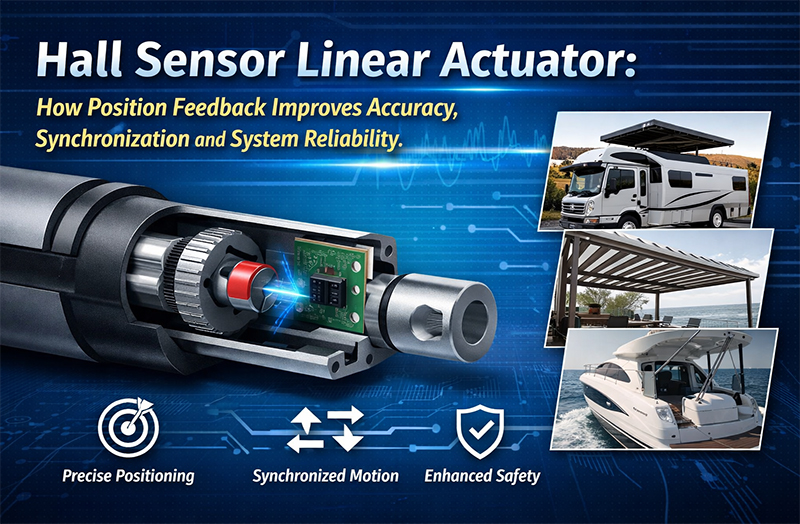
Behind these capabilities, there is a small but critical component inside many electric linear actuators: the Hall sensor.
Although often overlooked, the Hall sensor plays a key role in transforming a traditional linear actuator into a smart, controllable, and feedback-enabled motion device.

A Hall sensor is a magnetic sensor based on the Hall effect.
In simple terms:
When a magnetic field changes, a Hall sensor converts this change into an electrical signal.
In a linear actuator, the Hall sensor does not directly measure position.
Instead, it detects magnetic field changes generated by the motor rotation, allowing the system to determine:
How many rotations the motor has completed
How fast the motor is running
Whether the motor is operating normally
By converting mechanical motion into electrical pulses, the Hall sensor provides the foundation for position feedback and motion monitoring.
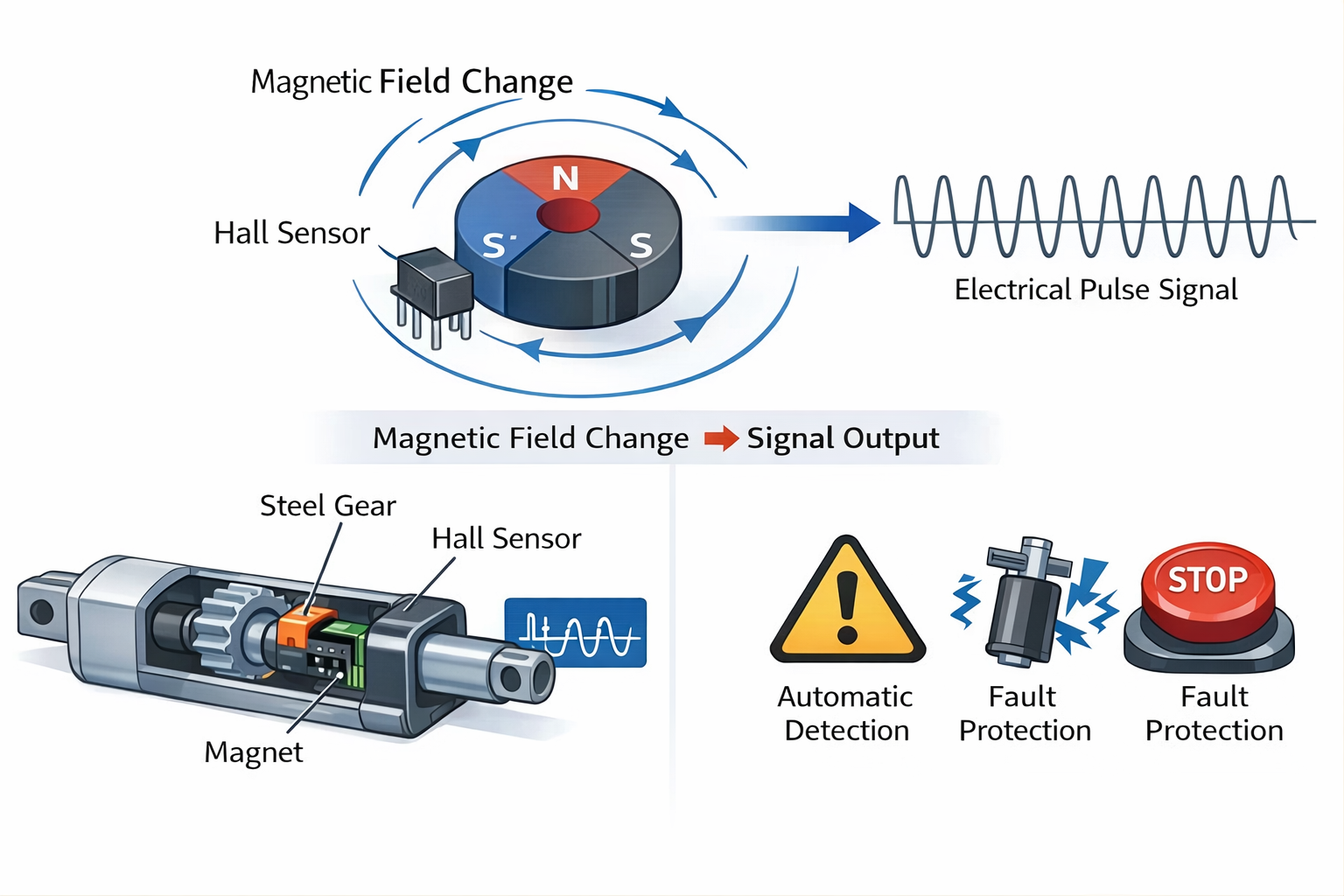
In a typical Hall feedback linear actuator, the structure works as follows:
A magnet is installed on the motor shaft or gearbox
When the motor rotates, the magnetic field changes
The Hall sensor detects these magnetic changes
Each change generates an electrical pulse
The controller counts pulses to calculate actuator position
The linear displacement of the actuator is converted into countable digital signals.
This is the core value of Hall feedback:
mechanical motion becomes measurable, traceable, and controllable.
Without position feedback, most standard linear actuators can only perform basic actions:
Extend
Retract
Stop at mechanical limit
With a Hall sensor, the system knows exactly:
The current position in millimeters
The remaining distance to the target position
Whether any deviation or abnormal motion occurs
This upgrades the actuator from “approximate movement” to “precise digital positioning.”
Many applications require multiple linear actuators to move together, such as:
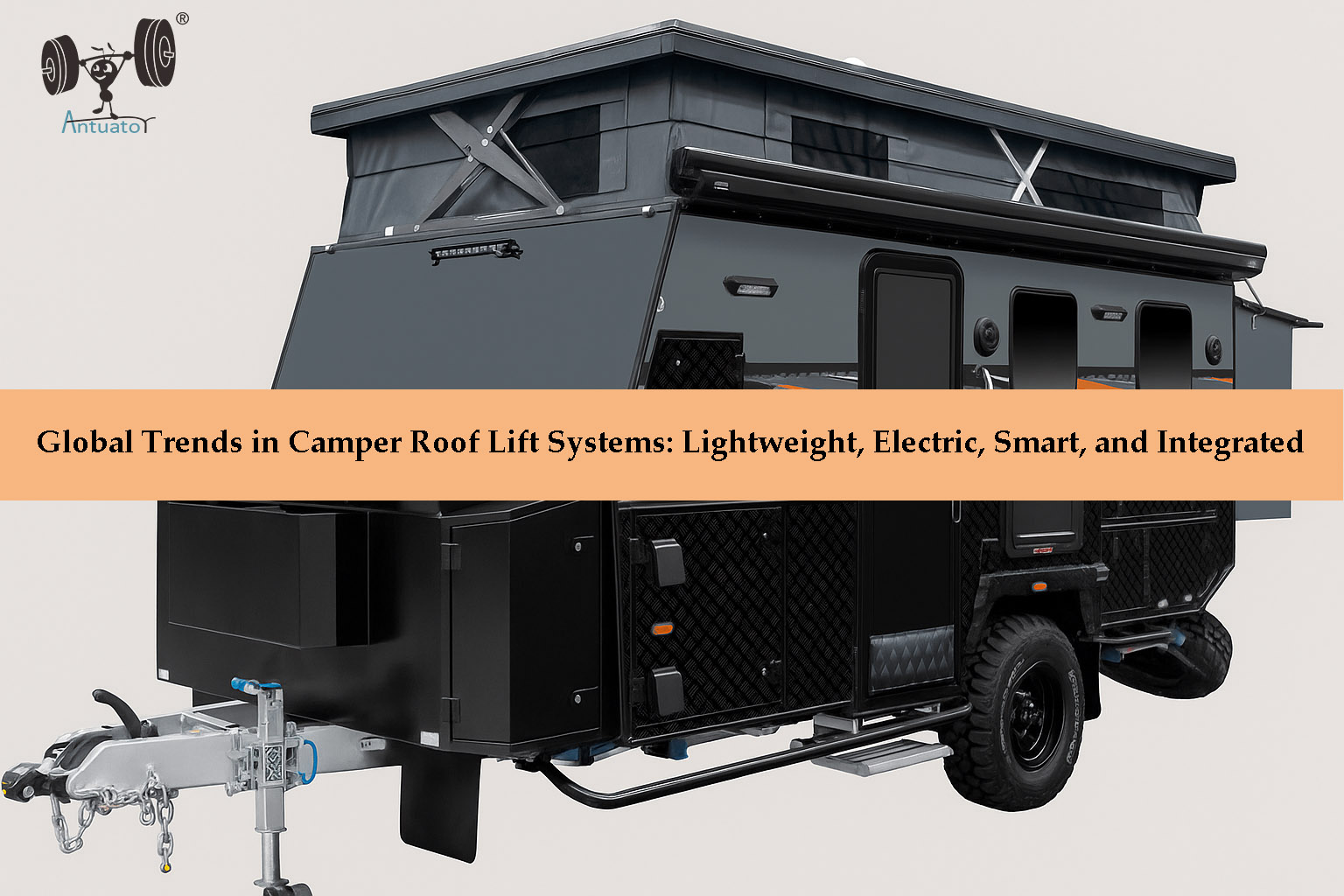
RV electric roof lift systems
Adjustable platforms
Pergola and sunshade structures
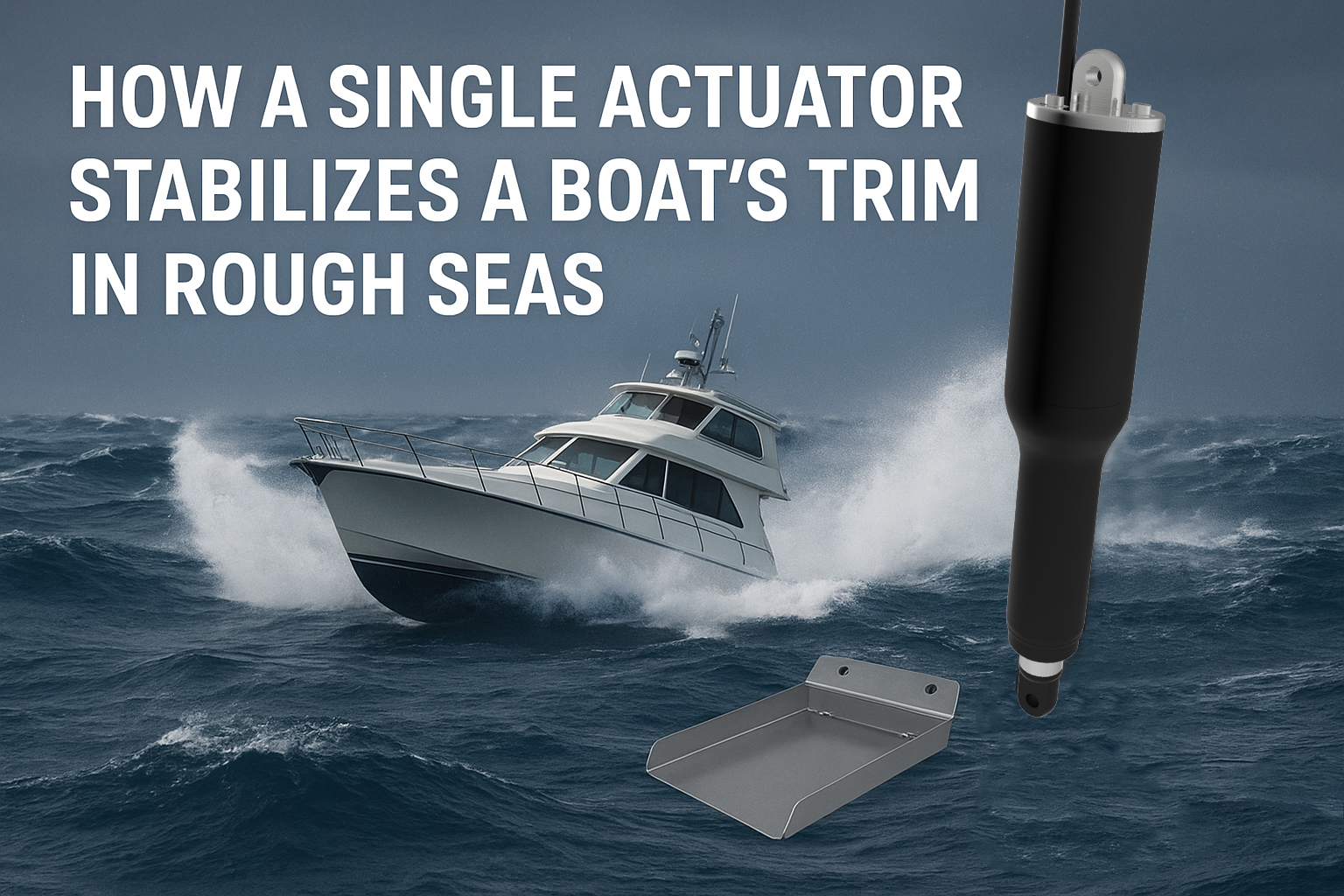
Marine lifting mechanisms
Without feedback, common problems include:
One actuator moving faster than others
Uneven load distribution
Structural stress and long-term deformation
With Hall sensors:
The controller continuously compares positions
Speed corrections are applied in real time
All actuators remain synchronized
This is why Hall feedback is a standard feature in high-end synchronized motion systems.
Hall feedback is not only about positioning — it is also a safety monitoring tool.
When the system detects:
Abnormal position changes
Motor running without expected displacement
Sudden speed fluctuations or stalls
The controller can:
Stop the system immediately
Trigger protection logic
Prevent mechanical damage or safety risks
This is especially important in outdoor, marine, RV and industrial automation environments, where reliability and safety are critical.
Some users worry that adding Hall sensors increases system complexity.
In practice:
For end users: almost no difference in operation
For system integrators: easier control and debugging
For overall system: significantly improved reliability
The real engineering challenges are:
Stability of the Hall sensor itself
Internal actuator mechanical design
Signal compatibility between controller and feedback
These factors define the true quality of a Hall feedback linear actuator.
Today’s automation users no longer ask:
“Can it move?”
They ask:
Can it stop at an exact position?
Can multiple actuators remain synchronized long-term?
Can the system operate reliably for years?
Hall sensors are the key technology that transforms a linear actuator from a simple motion device into a fully controllable, monitorable, and intelligent system component.
Hall feedback linear actuators are widely used in:
RV and camper roof lifting systems
Pergola and sunshade automation
Marine and yacht equipment
Adjustable furniture and platforms
Industrial automation equipment
Any application requiring position accuracy, synchronization, and safety control benefits from Hall feedback.
Choosing a Hall sensor linear actuator is not just about adding a feature.
It is about improving the entire system:
Higher positioning accuracy
Reliable synchronized motion
Better safety and protection
Long-term operational stability
In many modern automation projects, Hall feedback is no longer optional — it is a necessity.
Choosing the right linear actuator is essentially choosing the reliability of your entire system.